Mouse PI Aims to Fill Cuphead's Animation Void
- By Layla
- Feb 09,2026
The 2017 release of Cuphead achieved something unprecedented in video games, or at least executed on a scale never seen before: it constructed an entire game around fully hand-drawn art and animation, mirroring the style of a 1930s cartoon. We likely haven't seen a similar effort since, largely because such meticulous hand-crafted visuals are incredibly challenging, time-consuming, and labor-intensive. Now, a new project, entirely hand-drawn and hand-animated, is preparing to arrive on our PCs and consoles. It's titled Mouse: P.I. for Hire, and its shared trait with Cuphead essentially begins and ends with its dedication to handcrafted artistry. Mouse is a distinct, equally stunning game, and after viewing a hands-off demo, my interest is as piqued as it was upon first seeing Cuphead. In short, I'm very intrigued.
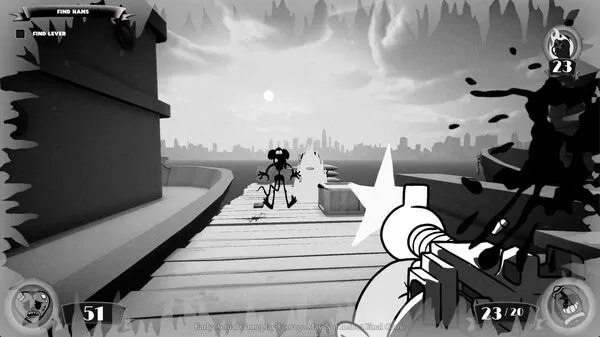
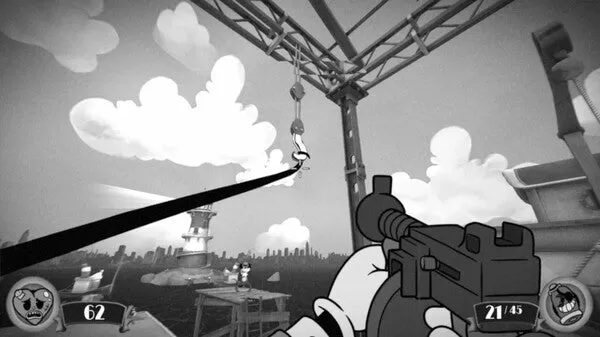
As is immediately apparent, Mouse is presented in black and white. Its aesthetic is reminiscent of the Steamboat Willie era of early animation, complete with guns that persistently wobble even when idle, as if made of rubber. (More on the weaponry shortly.) It's also plainly clear that Mouse is a first-person shooter. You assume the role of Jack Pepper, voiced by the in-demand video game actor Troy Baker, who delivers a deliberately stereotypical New York accent. He is, after all, an early-20th-century private detective; he has to sound the part.
Mouse screenshots
View 10 Images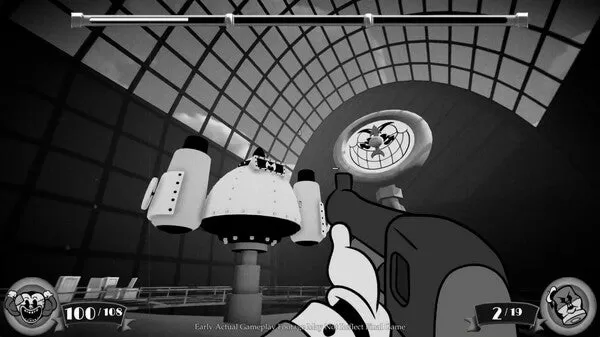
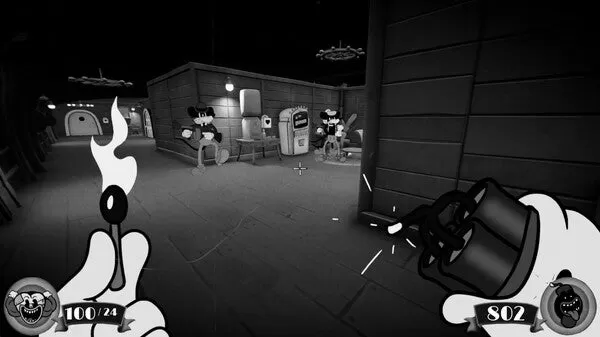
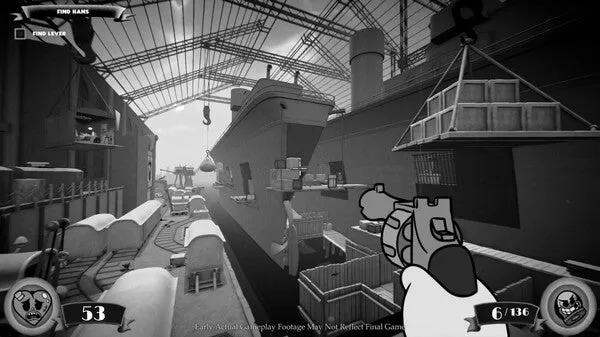
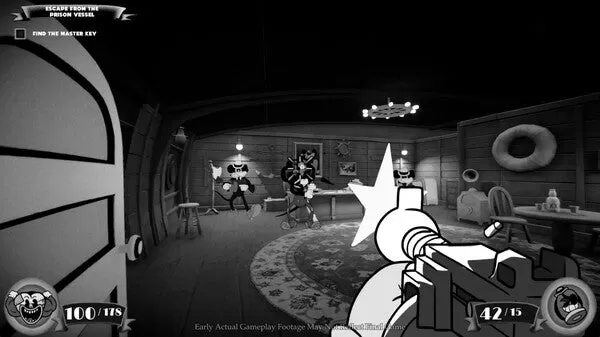
The aspect of the Mouse demo I particularly appreciated was that it wasn't merely a mindless run-and-gun FPS (though there's certainly a place for that). Instead, the mission I observed was set in an opera house, where Pepper needed to locate and interrogate the stage designer. We began at a back entrance, speaking to a waiter to inquire about Roland, the stage designer in question. Having received no useful information, we proceeded inside to investigate independently.
"What I really liked about the demo I saw of Mouse was that it wasn't just a mindless run-and-gun first-person shooter."
Inside the kitchen, the visual aesthetic becomes clearer. Notice how the characters are 2D sprites existing within a 3D space, similar to the monster designs in the original Doom. Peering through a porthole window in the kitchen door reveals one of Mouse's detective mechanics: reconnaissance. Jack takes a photograph, identifying several members of the Big Mouse Party – a group we decidedly want to avoid.
Venturing further into the kitchen, we encounter a slick waiter who offers to discreetly guide us upstairs to our destination – for a $30 bribe. We decline and instead find a ventilation shaft to crawl through. A hidden stash of cash inside the vent is a welcome find, but the bottom giving way and sending us crashing back outside to our starting point is decidedly less so.
On the second attempt, we navigate back through the kitchen and into the same vent, carefully skirting the newly created hole in the floor. This leads to a dressing room where a Thompson machine gun and some ammunition await. Our presence is, of course, unauthorized, and the Big Mouse Party members respond with hostility. Here, we get our first look at the first-person shooter combat, including a beautifully animated reload sequence.
We hear a muffled voice that could be Roland, but first, a nearby safe presents an opportunity to try the lockpicking minigame. Inside, we find... a cup of coffee? Then, events escalate rapidly as the wall in front of us explodes. We dispatch the foe emerging from the smoke and subsequently use TNT ourselves to blow a hole in the floor, descending into the opera house's lower levels.
We finally locate Roland, who has been roughed up. Jack deduces that the so-called 'extras' aren't extras at all and uncovers the Big Mouse Party's true scheme: to assassinate the mayoral candidate, Stilton, who is watching the evening's performance from the balcony. The plan is to fire the live cannon on stage, which is aimed directly at him, during the intermission.
The action progresses to more combat, featuring a shotgun that appears to deliver a satisfying impact, complemented by another impressive reload animation. We also see explosive barrels that set enemies ablaze in a fittingly cartoonish manner. There's even an ice barrel – possibly containing liquid nitrogen? – that freezes nearby adversaries upon detonation, allowing you to shatter them into pieces with a kick, reminiscent of Terminator 2. Later, the demo showcased a third weapon: the turpentine gun. This weapon melts the cartoon enemies, who are literally composed of paint, evoking memories of The Dip from Who Framed Roger Rabbit?
"The turpentine gun melts these cartoon characters who are literally made of paint, not unlike the Dip from Who Framed Roger Rabbit?"
After some platforming and confronting a new enemy type with helicopter-like tails, we find our way back upstairs, only to be dropped through a trapdoor back into the basement. Here, we meet the Old Rat Stuntman, who teaches Jack the double-jump maneuver. After testing it and discovering a secret – a baseball trading card for "Brie" Ruth (a pun on the mice's love of cheese) – we return to the stage to sabotage the cannon and save Stilton. This triggers a boss fight against an enraged opera performer, whom we dispatch with the turpentine gun, revealing its reload animation, which is arguably the most stylish one we've seen so far.
A fire has now spread from the stage throughout the opera house, and we must escape. Our exit, however, will require fighting our way out using every weapon available. No problem for a hard-boiled detective like Jack Pepper. Let's observe some uninterrupted combat.
After finally escaping the burning building, we rendezvous with the stage designer, who divulges what he knows about the vanished performer. He mentions something about a secret laboratory beneath the performer's mansion. That doesn't sound suspicious at all... With that, we exit the level, concluding the demo.
Therefore, although I haven't had the chance to play it myself, based on what I've seen of Mouse – and you've now seen most of it – I am genuinely excited to try it. It appears to strike the right balance with its lighthearted, slightly comedic tone, possessing self-awareness while promising a solid FPS experience at its core. After all, as magnificent and commendable as the hand-drawn art and animation are, if the gameplay fails to support the visual style and maintain engagement throughout the campaign, its beauty would be for naught. But at this stage, I am exceedingly optimistic.
Latest News
more >-

- Vampire Survivors Unleashes Major Content Update
- May 17,2026
-

-

- Atlan, One Punch Man Crossover Launches June 26
- May 14,2026
-
- Sims 4 Burglary Event Returns
- May 12,2026
-
- "Dune: Awakening" opens character creator
- May 12,2026