Cinderella’s 75th Anniversary: How a Timeless Tale Rescued Disney
- By Lillian
- Feb 08,2026
Just as Cinderella’s magical night was set to vanish at midnight, The Walt Disney Company faced its own dire moment in 1947, burdened by $4 million in debt after the financial struggles of Pinocchio, Fantasia, and Bambi, worsened by World War II. Yet, this cherished princess and her iconic glass slippers revived the studio, ensuring its animation legacy endured.
As Cinderella celebrates its 75th anniversary of its wide release on March 4, we spoke with Disney insiders who remain inspired by this enduring rags-to-riches story. It echoes Walt Disney’s own journey and offered hope not only to the studio but also to a world rebuilding after war, seeking inspiration and belief.
A Timely Triumph for Disney
To understand this, let’s rewind to 1937, when Disney experienced its own fairy-tale moment with Snow White and the Seven Dwarfs. Its massive success—briefly the highest-grossing film until surpassed by Gone with the Wind—enabled Disney to build its Burbank studio, still its headquarters, and pursue more animated features.
In 1940, Pinocchio followed Snow White with a $2.6 million budget, a million more than its predecessor, but lost about $1 million despite critical acclaim and Academy Awards for Best Original Score and Song. Fantasia and Bambi also flopped, adding to the studio’s debt, largely due to World War II’s impact after Germany’s 1939 invasion of Poland.
“The war shut down Disney’s European markets, so films like Pinocchio and Bambi struggled,” said Eric Goldberg, co-director of Pocahontas and lead animator for Aladdin’s Genie. “The U.S. government then enlisted Disney to produce training and propaganda films, and through the 1940s, the studio made Package Films like Make Mine Music, Fun and Fancy Free, and Melody Time. These were excellent but lacked cohesive storytelling.”
Package Films were anthologies of short cartoons combined into feature-length films. Disney produced six between Bambi in 1942 and Cinderella in 1950, including Saludos Amigos and The Three Caballeros, tied to the U.S. Good Neighbor Policy to counter Nazism in South America. While these recouped costs and reduced debt from $4.2 million to $3 million by 1947, they diverted Disney from creating true animated features.
“I wanted to return to feature films,” Walt Disney said in 1956, per The Animated Man: A Life of Walt Disney by Michael Barrier. “But it required significant investment and time. My brother Roy and I had a heated argument… I said we either move forward or sell out.”
Facing the possibility of liquidating, Walt and Roy bet everything on their first major animated feature since Bambi. Failure could have ended Disney’s animation studio.
“The world needed to believe in rising from hardship,” said Tori Cranner, Art Collections Manager at Walt Disney Animation Research Library. “Pinocchio is stunning, but it lacks the joy of Cinderella, which was exactly what post-war audiences craved.”
Cinderella: A Story of Resilience
Walt’s connection to Cinderella began in 1922 at Laugh-O-Gram Studios, where he made a short based on Charles Perrault’s 1697 tale, possibly rooted in a story from 7 BC. This classic of good versus evil and dreams fulfilled resonated deeply with Walt.
Though Laugh-O-Gram went bankrupt, the Cinderella short hinted at its personal significance for Walt, reflecting his own rise from humble beginnings. 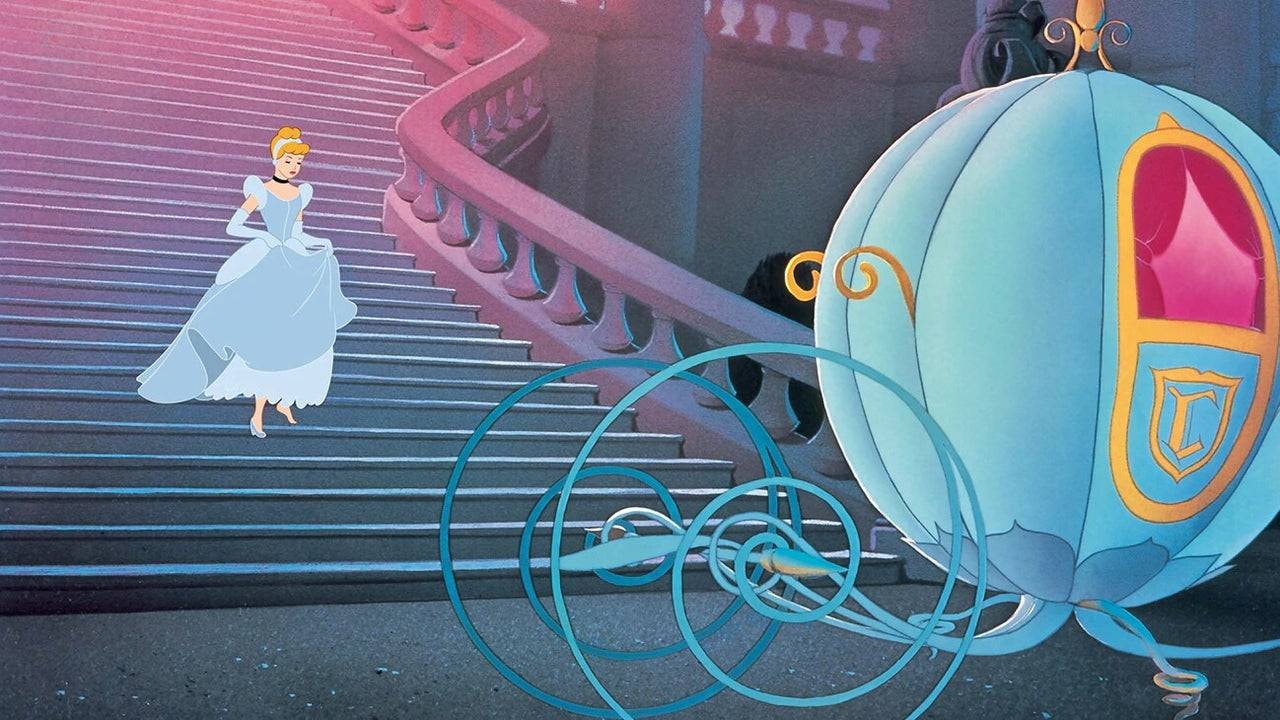
“Snow White was a gentle dreamer waiting for her prince,” Walt said in Disney’s Cinderella: The Making of a Masterpiece. “Cinderella, however, was practical. She believed in dreams but took action. When her prince didn’t come, she went to the palace and found him.”
Cinderella’s strength shone through despite her cruel stepmother and stepsisters. Walt’s own journey, marked by setbacks yet driven by relentless ambition, mirrored her resilience.
Initially planned as a 1933 Silly Symphony, Cinderella’s scope grew, becoming a feature film by 1938. War and other delays pushed its release to 1950, allowing it to evolve into a beloved classic.
“Disney modernized fairy tales, infusing them with heart and universal appeal,” Goldberg said. “Unlike the grim cautionary tales, Disney’s versions were joyful and timeless, making characters unforgettable.”
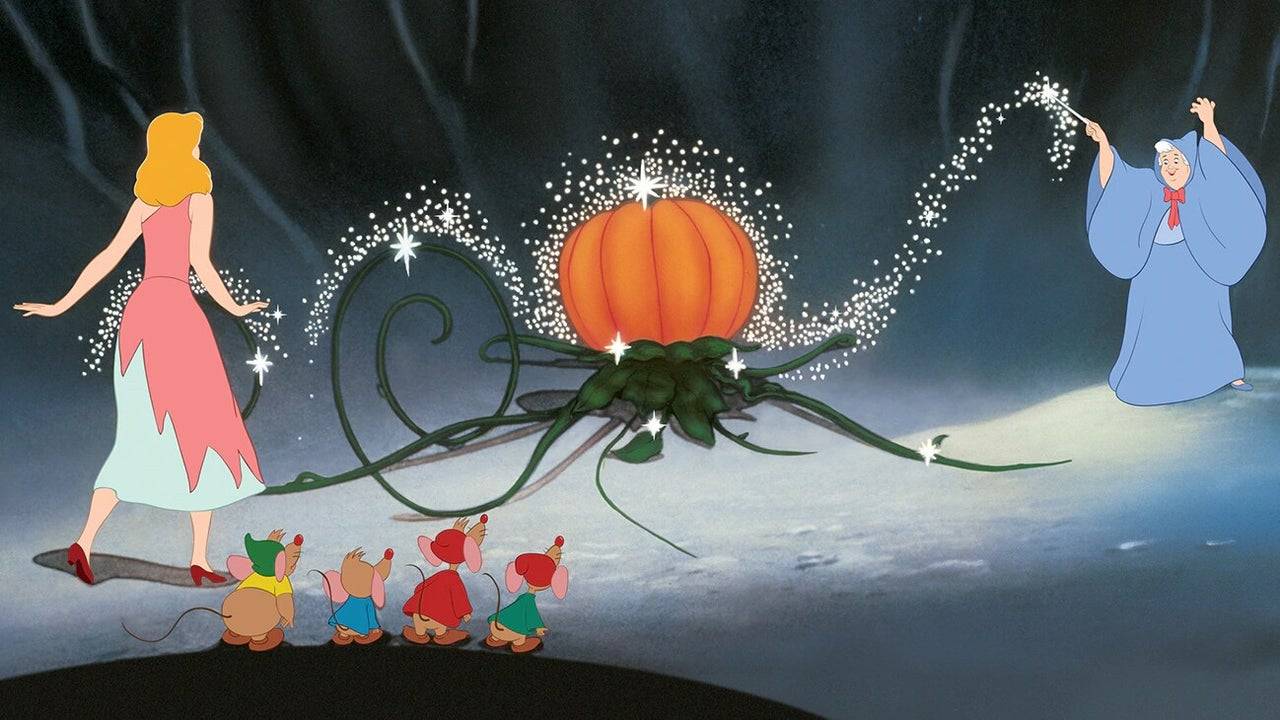
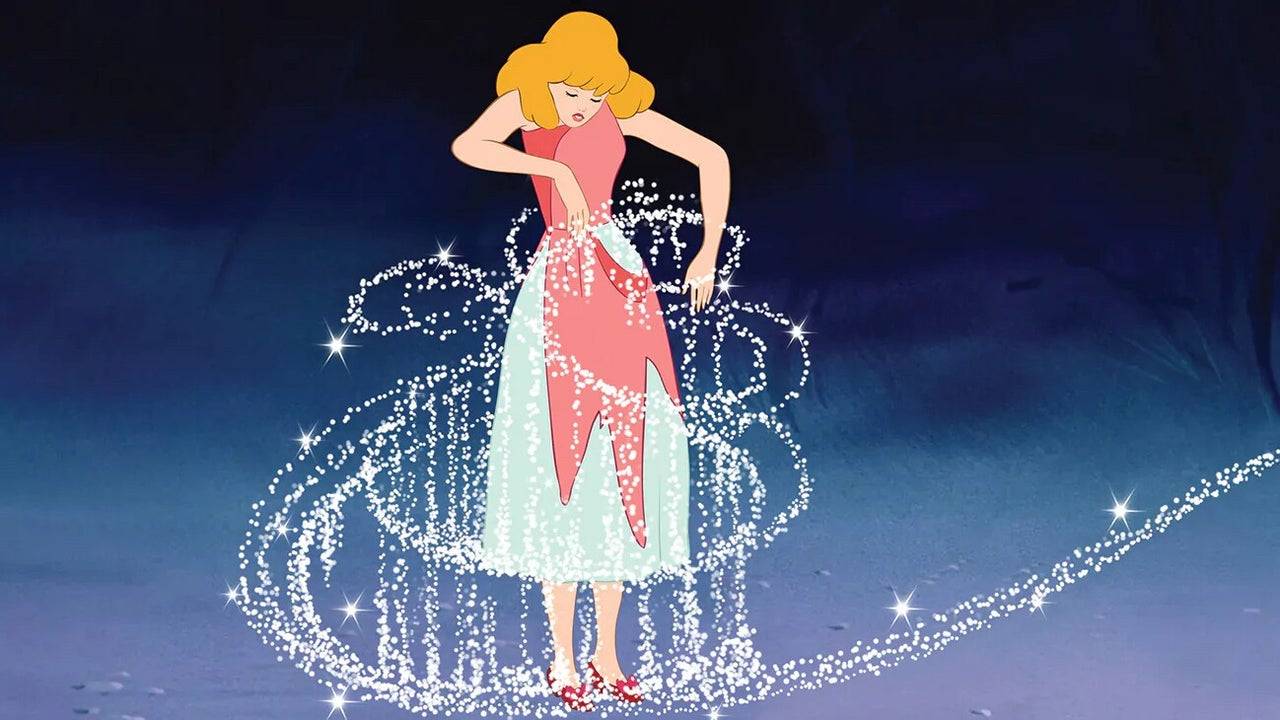
Cinderella’s animal friends—Jaq, Gus, the mice, and birds—added humor and warmth, revealing her true self. The Fairy Godmother, reimagined by animator Milt Kahl as a relatable, bumbling grandmother, connected deeply with audiences, culminating in the iconic transformation scene.
“Every sparkle in Cinderella’s dress transformation was hand-drawn and painted,” Cranner said. “A brief pause mid-transformation, where the magic holds, creates a breathtaking moment.”
Thanks so much for all your questions about Cinderella! Before we sign off, enjoy this pencil test footage of original animation drawings of the transformation scene, animated by Marc Davis and George Rowley. Thanks for joining us! #AskDisneyAnimation pic.twitter.com/2LquCBHX6F
— Disney Animation (@DisneyAnimation) February 15, 2020
Disney’s addition of the breaking glass slipper heightened Cinderella’s agency. “She’s not a passive heroine,” Goldberg said. “When her stepmother breaks one slipper, Cinderella reveals the other, proving her strength and control.”
Premiering in Boston on February 15, 1950, and widely released on March 4, Cinderella earned $7 million on a $2.2 million budget, becoming the sixth-highest-grossing film of 1950 and earning three Academy Award nominations.
“Cinderella marked Disney’s return to narrative features,” Goldberg said. “It restored the studio’s confidence, paving the way for Peter Pan, Lady and the Tramp, and more.”
Cinderella’s Lasting Legacy
Cinderella’s influence endures, from her castle at Walt Disney World and Tokyo Disneyland to the studio’s iconic logo. Her impact echoes in modern Disney films like Frozen, where Elsa’s dress transformation draws directly from Cinderella’s magic.
“Cinderella’s legacy is in the sparkles of Elsa’s transformation,” said Becky Bresee, lead animator for Frozen 2 and Wish. “Her influence shapes how we honor Disney’s classics.”
The Nine Old Men and Mary Blair brought unmatched artistry to Cinderella, but its core message resonates most. “Cinderella is about hope,” Goldberg said. “It shows that perseverance and strength make dreams possible, no matter the era.”
Latest News
more >-

- Vampire Survivors Unleashes Major Content Update
- May 17,2026
-
-

- Atlan, One Punch Man Crossover Launches June 26
- May 14,2026
-
- Sims 4 Burglary Event Returns
- May 12,2026
-
- "Dune: Awakening" opens character creator
- May 12,2026