Is Your DVD Collection at Risk?
- By George
- Feb 09,2026
If you, like many of us, have a collection of DVDs gathering dust on a shelf, recent reports may have you questioning whether your discs are succumbing to deterioration.
Many physical media collectors are familiar with the concept of DVD rot, even if they don't know the exact term. The broader issue of disc degradation has impacted various media for decades, from LaserDiscs and CDs to video games across multiple platforms. Essentially, any optical disc is vulnerable to chemical breakdown due to several factors, which can lead to playback problems—ranging from minor glitches to the disc becoming completely unreadable.
Generally, encountering disc rot in your personal collection is an unlucky and random event. However, occasionally, the root cause is a manufacturing defect linked to a specific production batch. While problematic discs have surfaced in the past, it has become increasingly clear that a significant number of Warner Bros. DVDs produced between 2006 and 2009 are affected by a recurring issue.
This problem recently gained widespread attention thanks to an article by JoBlo’s Chris Bumbray, who personally experienced it with WB-released Humphrey Bogart and Errol Flynn box sets from that period. However, among dedicated collectors, this has been a known issue for years. Physical media expert and YouTuber Spencer Draper, also known as Damn Fool Idealistic Crusader, provided an in-depth analysis in a video posted in late 2021 (noting that others had identified the problem earlier).
Identifying the Problem and the Studio's Reaction
As Draper and other investigators delved into the issue, they determined it wasn't universal for all WB DVDs from that era. Instead, the problem was traced to a single manufacturing facility—the now-closed Cinram plant in Pennsylvania. This connection was identified through a small manufacturing code printed on the disc's inner ring on the data side (more on this later).
All optical discs are susceptible to chemical deterioration from various causes, which can result in playback issues.
As an avid collector with an estimated 5,000-6,000 films across formats like VHS, LaserDisc, DVD, Blu-ray, and 4K UHD, Draper discovered that a large portion of his DVDs were Warner Bros. titles from the affected period. After learning about the problem, he told me, "I went into a panic and checked every single disc, one by one."
The challenge is that DVD rot doesn't always manifest in the same way. Draper explained: "I found that even performing a scan or creating a digital backup wouldn't guarantee a disc was free from rot. The only definitive way to check was to play the entire disc—not just the main feature, but all the special features and menus. I also had to research which titles other people had reported as faulty that I didn't own."
Draper began contacting Warner Bros. Home Entertainment about the issue, a process he detailed as initially difficult. However, as he mentioned in a follow-up video, WB eventually sent him a large package replacing every faulty title he reported—provided the studio still had them in production.
Regarding the studio's current stance and response, IGN contacted Warner Bros. Home Entertainment and received the following statement:
"Warner Bros. Home Entertainment is aware of potential issues affecting select DVD titles manufactured between 2006 – 2009 and has been working directly with consumers on replacements or alternate solutions for nearly a decade. Any consumer who is experiencing an issue can contact [email protected]. This is not a new issue. A website recently experienced this issue themselves and decided to write a story about it (since updated) and that has caused the latest news. WBHE has been working with consumers for nearly a decade when it was first brought to our attention. We have offered replacements when possible, or an alternate title when needed. Some of the discs are now out of print or the titles no longer licensed for DVD release. In these cases, WBHE offered an alternate title as a replacement."
This statement is similar to the one provided to JoBlo, though it extends the affected years to include 2009, which aligns with Draper's findings.
How to Check if Your DVDs Are Affected
If you're concerned your DVDs might be affected, your first step is to check the copyright year on the packaging. Discs produced between 2006 and 2009 are the ones at risk. Titles made outside this window are likely safe for now, though general disc longevity is discussed later.

If your disc falls within those years, Draper advises, "You need to examine the manufacturing codes on the inner ring on the back of the disc. If you see the letters 'IFPI' anywhere in the code, it's likely one of the problematic ones."
Keep in mind these codes are minuscule, etched onto the clear plastic inner ring, and you may need a magnifying glass or camera to read them clearly.
There is one quick way to identify a safe disc, even from the 2006-2009 period. Check the back of the DVD case. Draper notes that if you see "a small blue stamp stating 'Disc Made in Mexico,'" your disc is safe, as those were produced at a different facility.
Ultimately, if you own a Warner Bros. DVD from those years and want to avoid scrutinizing labels, Draper suggests, "It doesn't hurt to just test the disc. The simplest method is to play it and fast-forward through the entire feature and all the extras. It might sound tedious, but it's an effective check."
Draper has helpfully compiled a list of titles known to be affected, which is an excellent resource for concerned collectors. His list also serves as a warning for those purchasing older titles, helping them avoid potential issues. This is particularly frustrating for titles that have no other physical release outside the problematic production era.
As a horror fan, one title on Draper's list that caught my eye was the DVD sets for HBO's Tales From the Crypt, with multiple seasons confirmed to be affected. This series is entangled in complex rights issues, making it unavailable for legal streaming, rental, or digital purchase. Worse, the WB-produced DVD sets are the only physical release the show ever received. This means fans seeking to own the series must gamble on the condition of discs that have a high probability of playback failure.
Unlike the more predictable deterioration of LaserDiscs, WB DVD rot is erratic. A disc might work perfectly today but fail the next time you try to play it.
For Draper, a similar concern applies to Volume Two of the classic RKO Tarzan films. This title had its sole physical media release from WB and is on the affected list. Its rarity commands high prices on the secondary market, like eBay. Even after purchasing a copy, there's no guarantee the discs are functional. Furthermore, even if they work upon arrival, failure can occur randomly later. Draper points out that while LaserDiscs were also prone to rot, they typically reached a point where if they hadn't failed, they were likely stable. The WB DVD issue, however, is far less predictable.
What is the Typical Lifespan of a DVD?
One silver lining is that this specific issue with a particular batch of Warner Bros. DVDs highlights that large-scale DVD rot is not a common occurrence, even as DVDs approach their fourth decade. Draper notes that while some early, poorly manufactured DVDs suffered from rot, these were exceptions.
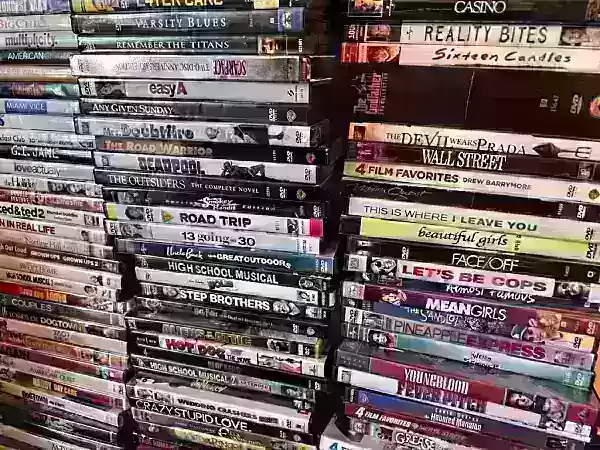
Regarding the typical lifespan of a DVD, Sony's official statement indicates that "a typical DVD disc has an estimated life expectancy of anywhere from 30 to 100 years when properly stored and handled." This is a wide range, but as we near the 30th anniversary of DVDs in 2026, Draper isn't overly concerned about widespread failure. "I have early Warner DVDs from 1997, the first year of the snapper case era, and they are perfectly fine. They managed to nail those perfectly. They still work great."
So far, there are no significant or widespread reports of similar issues with Blu-ray discs. While there have been some recent concerns about Blu-rays, Draper emphasizes that beyond isolated incidents in France likely tied to a specific manufacturer, no major repeatable pattern exists. (In contrast, nearly all WB-produced HD DVD titles from the format war with Blu-ray are now unplayable.)
Sony's official stance is that "a typical DVD disc has an estimated life expectancy of anywhere from 30 to 100 years when properly stored and handled."
Criterion Collection once faced a similar Blu-ray rot issue linked to a specific manufacturing plant. Fortunately, the number of affected titles was limited. Criterion handled the situation transparently, confirming the details and the specific titles involved, and initiating an exchange program for discs from later pressings.
As mentioned, Warner Bros. is aware of the DVD problem. You can start the replacement process by emailing [email protected]. However, Draper cautions that responses can vary significantly in timeliness and helpfulness. Some customers face hurdles, such as being asked for receipts for products purchased long ago. Furthermore, while WB may have newer editions of many films—often produced via their MOD (Made on Demand) program—some titles are out of print due to expired licensing rights. In these cases, WB's statement says they offer an alternate title, which is less than ideal if you specifically want the original film or series.
Draper wishes the company had been more transparent, like Criterion, by publicly acknowledging the issue, providing a list of affected titles, and explaining that the problem originated from a single plant with identifiable codes. His self-compiled list remains the primary resource for consumers, as no official list exists.
Another complication is that replacement discs for newer releases might lack special features that were exclusive to the original DVD. Draper experienced this with films like *Pat Garrett and Billy the Kid*. While the film recently received a Criterion Collection 4K UHD release, the 2006 Warner Bros. two-disc DVD contained hours of exclusive extras not carried over—and his copy has deteriorated.
In the streaming era, physical media enthusiasts often argue that owning a copy on your shelf is the only way to guarantee permanent access to favorite films and shows, given the instability of digital licensing. For the most part, this remains true. However, the WB DVD rot issue highlights a significant vulnerability, a troublesome legacy of the Pennsylvania Cinram plant that continues to frustrate collectors long after its closure.
Latest News
more >-

- Vampire Survivors Unleashes Major Content Update
- May 17,2026
-

-

- Atlan, One Punch Man Crossover Launches June 26
- May 14,2026
-
- Sims 4 Burglary Event Returns
- May 12,2026
-

- "Dune: Awakening" opens character creator
- May 12,2026